
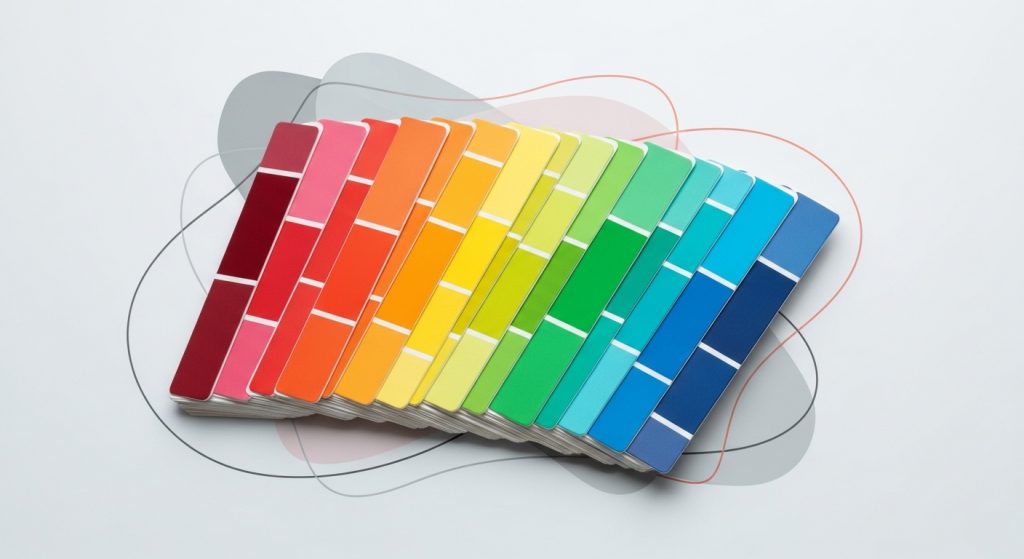
The silent communicator, the emotional trigger, the indelible mark on the canvas of your customer’s mind – color is arguably one of the most powerful, yet often underestimated, tools in your brand’s arsenal. It’s more than just a pretty face; it’s a strategic decision that shapes perception, drives engagement, and builds lasting recognition. In a world saturated with fleeting attention, the right brand color selection guide isn’t just about aesthetics; it’s about crafting an identity that resonates deeply and authentically.
Imagine walking into a coffee shop: the warm browns and inviting greens instantly evoke a sense of comfort and nature. Now imagine that same shop painted in neon pink and stark black. Your perception, mood, and even your desire to purchase would shift dramatically, wouldn’t they? This isn’t coincidence; it’s the profound impact of brand identity colors at play. From the moment a customer encounters your logo to their experience on your website, every hue tells a story. This comprehensive guide will take you on a journey through the art and science of choosing business colors, empowering you to build a palette that truly reflects your brand’s soul and propels its success.
The Unseen Language: Why Color Matters in Branding
Before we dive into the specifics of picking your palette, let’s firmly establish why color holds such immense power in the branding sphere. It’s not just a decorative element; it’s a fundamental aspect of non-verbal communication that bypasses conscious thought and taps directly into emotions.
Beyond Aesthetics: The Psychological Impact
Colors are intrinsically linked to human psychology. They can evoke feelings of trust, excitement, calm, urgency, or luxury, often without a single word being uttered. This is the essence of logo color psychology, but its reach extends far beyond your emblem. Every shade you choose contributes to a cumulative emotional experience.
Think about the ubiquitous red of Coca-Cola, signifying energy and passion, or the calming blue of Facebook (Meta), originally chosen for its accessibility to founder Mark Zuckerberg, who is red-green colorblind, but also effective in conveying reliability and communication. These aren’t arbitrary choices; they are meticulously selected to align with the brand’s core message and desired emotional response. Research consistently shows that color can improve brand recognition by up to 80%, a staggering figure that underscores its importance in cutting through the noise.
“Color is a power which directly influences the soul.” – Wassily Kandinsky
This psychological impact is why understanding the nuances of different colors is paramount. It allows you to intentionally craft a narrative that resonates with your target audience on a subconscious level, guiding their feelings and perceptions towards your brand.
Consistency is Key: Building Recognition
Once you’ve chosen your colors, the next crucial step is consistency. A cohesive and consistently applied marketing color schemes strategy is the bedrock of strong brand recognition. When your brand’s colors appear uniformly across all touchpoints – from your website to your social media, your product packaging to your physical storefront – you create a visual shorthand that customers quickly learn to associate with you.
Inconsistency, on the other hand, breeds confusion and diminishes trust. If your logo appears in one set of colors on your website, but another on your business cards, it weakens your professional image and makes it harder for customers to form a solid, reliable impression of your brand. Think of iconic brands like Tiffany & Co. Their distinctive robin’s egg blue is instantly recognizable worldwide, not just because it’s a unique shade, but because it’s applied with unwavering consistency. This consistent application transforms a simple color into a powerful brand asset, creating a memorable identity that stands out in a crowded marketplace.
Decoding the Spectrum: A Deep Dive into Color Psychology
To effectively choose your brand’s palette, you must first understand the language of colors themselves. Each hue carries a spectrum of associations, though these can vary slightly based on cultural context and specific shades. Here’s a breakdown of common psychological associations for primary and secondary colors:
Warm Colors: Energy and Passion
Warm colors are often associated with energy, excitement, passion, and comfort. They tend to be attention-grabbing and can evoke a sense of urgency.
- Red:
- Associations: Energy, passion, danger, love, excitement, urgency, hunger, strength.
- Branding Use: Often used by food brands (Coca-Cola, McDonald’s), retail sales (target, discount signs), automotive (Ferrari), and media for attention-grabbing impact. Can convey power and aggression if not used carefully.
- Orange:
- Associations: Enthusiasm, creativity, warmth, fun, affordability, youthfulness, confidence.
- Branding Use: Frequently adopted by brands wanting to project a friendly, accessible, or innovative image (Nickelodeon, Fanta, Amazon’s orange arrow). Less aggressive than red, more playful.
- Yellow:
- Associations: Happiness, optimism, cheerfulness, intellect, caution, warning.
- Branding Use: Often used to evoke joy and positivity (Chupa Chups, Snapchat). Bright yellows can grab attention, but overuse can feel overwhelming or cheap. Golden yellows can suggest prestige.
Cool Colors: Calm and Professionalism
Cool colors are generally perceived as calming, trustworthy, professional, and refreshing. They can also convey stability and wisdom.
- Blue:
- Associations: Trust, reliability, stability, professionalism, calmness, serenity, sadness (in some contexts), intelligence.
- Branding Use: One of the most popular choices for corporate brands (IBM, Facebook, PayPal, Samsung), healthcare, finance, and technology, due to its strong association with trust and security. It’s a key color when considering the best colors for branding in these sectors.
- Green:
- Associations: Nature, growth, health, freshness, wealth, tranquility, harmony, environmentalism.
- Branding Use: Heavily used by eco-friendly brands, financial institutions (due to association with money), health and wellness products (Whole Foods, Starbucks). Darker greens can denote prestige, lighter greens, freshness.
- Purple:
- Associations: Luxury, royalty, spirituality, wisdom, creativity, imagination, mystery.
- Branding Use: Often used by brands targeting a sophisticated, creative, or spiritual audience (Cadbury, Hallmark, Twitch). Historically associated with royalty and wealth.
Neutral Colors: Sophistication and Versatility
Neutral colors provide balance, sophistication, and a foundation for other colors to shine. They are highly versatile and can communicate different messages depending on their context and the colors they are paired with.
- Black:
- Associations: Sophistication, power, elegance, mystery, formality, luxury, strength, authority.
- Branding Use: Favored by luxury brands (Chanel, Nike, Prada), tech companies, and often used as a primary text color for readability. Too much black can feel oppressive or negative.
- White:
- Associations: Purity, cleanliness, simplicity, innocence, minimalism, clarity, spaciousness.
- Branding Use: A common background color for websites and logos, conveying simplicity and modernity (Apple, Google). Represents freshness and new beginnings.
- Gray:
- Associations: Balance, neutrality, sophistication, professionalism, timelessness, practicality.
- Branding Use: Often used in corporate branding, tech, and automotive for its serious and dependable feel. Can feel conservative or lacking personality if used excessively without complementary colors.
- Brown:
- Associations: Earthiness, reliability, warmth, comfort, nature, organic, ruggedness.
- Branding Use: Popular with organic food brands, coffee shops, and products emphasizing natural ingredients or a rustic aesthetic (UPS, M&Ms).
Table: Color Psychology Cheat Sheet for Branding
| Color | Common Positive Associations | Common Negative Associations | Typical Branding Applications |
|---|---|---|---|
| Red | Energy, passion, urgency, love, excitement, power | Anger, danger, aggression, warning | Food, retail, automotive, media, sports, urgent calls-to-action |
| Orange | Creativity, enthusiasm, warmth, fun, affordability | Immaturity, cheapness, loudness | Children’s products, entertainment, food, tech, casual brands |
| Yellow | Happiness, optimism, cheerfulness, intellect, caution | Anxiety, cowardice, warning, overly bright | Food, tourism, education, creative industries, attention-grabbing |
| Green | Nature, growth, health, wealth, tranquility, harmony | Envy, jealousy, stagnation, greed | Eco-friendly, finance, health, wellness, agriculture, outdoors |
| Blue | Trust, reliability, stability, professionalism, calm | Coldness, sadness, aloofness, conservatism | Tech, finance, healthcare, corporate, social media, government |
| Purple | Luxury, royalty, spirituality, wisdom, creativity | Arrogance, eccentricity, impracticality | Beauty, luxury goods, arts, spiritual, creative services, candy |
| Black | Sophistication, power, elegance, mystery, authority | Mourning, evil, death, oppression | Luxury, fashion, tech, photography, modern design |
| White | Purity, cleanliness, simplicity, minimalism, clarity | Sterile, empty, cold | Healthcare, bridal, tech, minimalist design, high-end products |
| Gray | Balance, neutrality, sophistication, practicality | Dullness, gloom, indecision | Corporate, tech, manufacturing, automotive, professional services |
| Brown | Earthiness, reliability, warmth, comfort, organic | Dirtiness, drabness, boring, cheap | Food, organic, rustic, coffee, outdoor gear, natural products |
Strategic Pillars: Factors to Consider When Choosing Your Business Colors
Selecting your brand identity colors is a multi-faceted decision. It’s not just about what looks good; it’s about what makes sense for your business on a strategic level.
Your Brand’s Personality and Values
This is perhaps the most critical starting point. What does your brand stand for? What kind of personality does it project? Are you:
- Innovative and Cutting-Edge? (Often blues, greens, or vibrant purples/oranges)
- Trustworthy and Dependable? (Blues, grays, darker greens)
- Playful and Creative? (Vibrant yellows, oranges, pinks, light blues)
- Luxurious and Exclusive? (Blacks, golds, deep purples, sophisticated grays)
- Organic and Sustainable? (Greens, earthy browns, natural tones)
Define your brand’s core values and its unique personality. This foundational understanding will act as a compass, guiding your color choices. A brand that values transparency and innovation might lean towards bright, clear blues and greens, while a brand focused on traditional craftsmanship might opt for more subdued, earthy tones.
Your Target Audience
Who are you trying to reach? Your audience’s demographics, psychographics, and cultural backgrounds play a significant role in how they perceive colors.
- Age: Younger audiences often respond well to vibrant, energetic colors, while older demographics might prefer more classic, subdued palettes.
- Gender: While stereotypes exist, it’s generally more effective to think about the mood or feeling rather than prescriptive “gendered” colors.
- Cultural Context: Color meanings are not universal. For example, white signifies purity in Western cultures but mourning in many Eastern cultures. Red can mean love in the West but luck and prosperity in China. Always research the cultural implications of your chosen colors if you operate in diverse markets.
- Income Level: Luxury brands often use black, gold, and deep jewel tones, while budget-friendly brands might use brighter, more accessible colors.
Understanding your audience helps ensure your chosen marketing color schemes resonate positively and avoid potential misinterpretations.
Your Industry and Competitors
While you want to differentiate, it’s also important to understand industry conventions. Certain industries have adopted specific color palettes because they align with consumer expectations and psychological associations.
- Technology/Finance: Often blue for trust, stability, and innovation.
- Food/Hospitality: Reds (appetite stimulation), greens (freshness), browns (natural, earthy).
- Environmental/Health: Greens (nature, growth), blues (calm, clean).
Analyze your competitors’ palettes. Do they all use similar colors? This presents an opportunity:
- To blend in: If industry standards are strong and consumers expect certain colors, you might choose to align. For example, many banks use blue to convey trust.
- To stand out: If everyone in your niche uses blue, perhaps a thoughtful use of green or purple could help you differentiate while still conveying a positive message. The goal is to choose the best colors for branding that both fit your industry and make you memorable.
Adaptability and Scalability
Your brand’s color palette needs to work seamlessly across all mediums and scales. Consider:
- Digital vs. Print: Colors display differently on screens (RGB) versus print (CMYK). Ensure your chosen colors look good and maintain their intended impact in both formats.
- Small vs. Large: Will your logo colors still be legible and impactful when scaled down for an app icon or favicon? Will they still make sense when blown up for a billboard?
- Accessibility: Is there enough contrast between text and background colors for visually impaired users? This is crucial for website color palette marketing and overall inclusivity. We’ll delve deeper into this.
- Future Growth: Will your color palette allow for expansion into new product lines or services without feeling outdated or restrictive?
A robust color palette is versatile, adaptable, and timeless enough to grow with your brand.
Building Your Brand’s Palette: A Step-by-Step Practical Guide
Now that we understand the ‘why,’ let’s move to the ‘how.’ Here’s a practical guide to constructing a compelling brand color selection guide.
Step 1: Research and Inspiration
Before you jump into picking swatches, gather inspiration.
- Mood Boards: Create digital or physical mood boards. Collect images, textures, patterns, and existing brand visuals that evoke the feelings, personality, and aesthetic you want for your brand. Don’t limit yourself to just competitor brands; look at art, nature, fashion, interior design, and photography.
- Competitor Analysis: What colors do your direct and indirect competitors use? How do they make you feel? What works, and what doesn’t? Identify gaps or opportunities for differentiation.
- Audience Insights: Look at what colors your target audience gravitates towards in their own lives, fashion, and preferred brands.
- Color Tools: Explore online tools like Adobe Color, Coolors.co, or Paletton to experiment with color combinations and harmonies.
Step 2: Selecting Your Core Colors
Your brand palette typically consists of more than one color. A balanced palette often includes:
- Primary Color (Dominant): This is your main brand color, the one most associated with your brand’s identity. It should strongly reflect your brand’s core personality and values. This is the color that will likely feature most prominently in your logo, website headers, and key marketing materials.
- Secondary Colors (Supporting): These colors complement your primary color, adding depth and versatility to your palette. They should be harmonious with your primary color but offer enough contrast to be distinct. Use them for subheadings, important elements on your website, or specific sections in marketing materials.
- Accent Colors (Highlighting): These are often bright, bold colors used sparingly to draw attention to specific elements like call-to-action buttons, key data points, or interactive elements. They should pop against your primary and secondary colors without clashing.
- Neutral Colors (Foundation): Whites, grays, and blacks are essential for text, backgrounds, and providing breathing room within your designs. They ensure readability and prevent your palette from becoming overwhelming.
When choosing these, remember the power of brand identity colors. Each chosen hue should contribute meaningfully to the overall message.
Step 3: Understanding Color Harmonies and Ratios
Just like musical notes, colors have harmonies that create pleasing visual experiences. Understanding these relationships is key to building a balanced and attractive palette.
- Monochromatic: Uses different shades, tints, and tones of a single color. Creates a subtle, sophisticated, and cohesive look.
- Analogous: Uses colors that are next to each other on the color wheel (e.g., blue, blue-green, green). Creates a harmonious and serene feel.
- Complementary: Uses colors directly opposite each other on the color wheel (e.g., red and green, blue and orange). Creates high contrast and energy, often used for accents.
- Triadic: Uses three colors evenly spaced on the color wheel (e.g., red, yellow, blue). Creates a vibrant and balanced palette, requiring careful management of dominance.
- Tetradic (Double Complementary): Uses two sets of complementary colors, forming a rectangle on the color wheel. This is the richest but also the most challenging to balance effectively, offering significant variety.
The 60-30-10 Rule: A popular guideline for applying your palette is the 60-30-10 rule:
- 60% Dominant Color: The primary color used for large areas.
- 30% Secondary Color: A complementary color used for supporting elements.
- 10% Accent Color: A bold color used sparingly for emphasis (e.g., call-to-action buttons).
This rule, originally from interior design, is highly effective in website color palette marketing and other design applications, ensuring balance and visual hierarchy.
Step 4: Testing and Feedback
Never finalize your palette without testing it.
- Mockups: Apply your chosen colors to mockups of your logo, website pages, social media templates, and business cards. See how they look in real-world contexts.
- A/B Testing: For digital elements like call-to-action buttons, test different accent colors to see which ones perform best.
- Audience Surveys: Get feedback from your target audience. Do the colors evoke the desired feelings? Are they appealing? Are they easy to read?
- Accessibility Check: Use online tools (e.g., WebAIM Contrast Checker) to ensure your color combinations meet WCAG (Web Content Accessibility Guidelines) standards for contrast, especially for text and interactive elements. This is a non-negotiable step for ethical and effective marketing color schemes.
By taking these steps, you move from abstract ideas to a concrete, tested, and effective brand color selection guide.
From Logo to Laptop: Implementing Your Brand’s Color Palette Across All Touchpoints
A truly effective brand palette isn’t confined to a single element; it permeates every interaction a customer has with your business. Consistency in applying your brand identity colors is paramount.
Logo Design: The First Impression
Your logo is often the first visual representation of your brand, and its colors are critical.
- Simplicity is Key: Often, a simpler color palette works best for logos, ensuring versatility across different backgrounds and sizes.
- Meaningful Choices: The colors in your logo should embody your brand’s core message and values. Consider the principles of logo color psychology discussed earlier. A tech startup wanting to convey innovation and trust might opt for a modern blue, while a luxury fashion brand might use black and gold to signify elegance.
- Monochrome Version: Always have a black-and-white or single-color version of your logo for situations where full color isn’t possible or desirable.
Website and Digital Presence
Your website is a primary digital storefront, and its color palette is a massive factor in user experience and conversion. This is where website color palette marketing truly shines.
- User Experience (UX): Colors guide the user’s eye, highlight important information, and create a specific mood. Use a harmonious palette to make navigation intuitive and enjoyable.
- Call-to-Action (CTA) Buttons: Your accent color is perfect for CTAs. It needs to stand out vividly against the rest of your site.
- Readability: Ensure high contrast between text colors and background colors. Dark text on a light background is generally easiest to read.
- Accessibility: As mentioned, use contrast checkers. Adhering to WCAG guidelines benefits everyone, including those with visual impairments, and improves your SEO. According to the Web Content Accessibility Guidelines, text and image of text should have a contrast ratio of at least 4.5:1, or 3:1 for large text.
[For more on web accessibility, consult the official WCAG guidelines.](https://www.w3.org/WAI/WCAG21/quickref/) - Brand Consistency: Your website colors must perfectly match your brand guidelines to reinforce your identity.
[Learn more about creating a consistent brand message](/blog/mastering-brand-messaging).
Marketing Materials and Advertising
Every piece of marketing collateral, from brochures to social media ads, is an opportunity to reinforce your marketing color schemes.
- Print Materials: Business cards, flyers, brochures, letterheads. Ensure color consistency with specific CMYK values for print.
- Digital Ads: Banners, social media graphics. Use your brand colors to immediately signal that the ad belongs to your company, cutting through the noise.
- Email Campaigns: Apply your palette to email templates, ensuring a cohesive and professional look that matches your website.
- Packaging: If you have physical products, packaging is a huge canvas for your brand identity colors. It’s often the first physical interaction a customer has with your product.
Physical Spaces and Products
Your brand’s colors extend beyond the digital realm, creating immersive experiences in the physical world.
- Retail Stores/Offices: Paint colors, furniture, decor, employee uniforms – all contribute to the overall brand atmosphere. Think of a minimalist tech store versus a cozy, rustic cafe.
- Product Design: The colors of your actual products (if applicable) are part of your brand. Consider how they integrate with your overall palette.
- Vehicle Wraps/Signage: For businesses with physical vehicles or prominent outdoor signage, these are critical brand assets that demand consistent color application.
By meticulously applying your chosen best colors for branding across all these touchpoints, you build a powerful, coherent, and unforgettable brand experience.
Common Pitfalls and How to Avoid Them
Even with the best intentions, it’s easy to stumble when choosing business colors. Here are some common traps and how to navigate them.
Overlooking Accessibility
This is more than just a legal requirement; it’s an ethical imperative and good business practice. Ignoring color contrast, especially for text, makes your content inaccessible to a significant portion of the population, including those with color blindness or low vision. This not only frustrates users but can lead to negative brand perception and potential legal issues.
- Solution: Always use contrast checkers for all text and interactive elements. Aim for at least WCAG AA standards (4.5:1 contrast ratio for normal text, 3:1 for large text) or even AAA where possible.
Ignoring Cultural Nuances
As discussed, color meanings are not universal. A color that signifies good luck in one culture might signify death or negativity in another. If your brand operates internationally or targets diverse demographics, a lack of cultural sensitivity can lead to serious missteps and alienation of potential customers.
- Solution: Research the cultural meanings of your chosen colors in all your target markets. When in doubt, opt for universal or less culturally charged combinations, or use different palettes for different regions.
Inconsistency Across Platforms
One color on your website, a slightly different shade in print, another on social media. This dilutes your brand’s impact and makes it harder for customers to recognize and trust you. It signals a lack of attention to detail and professionalism.
- Solution: Create a comprehensive brand style guide that clearly defines your exact color codes (HEX, RGB, CMYK, Pantone) for all applications. Distribute this guide to everyone involved in your brand’s design and marketing. Regular audits can help maintain consistency.
[For guidance on developing a strong brand presence, explore our post on designing an unforgettable logo.](/blog/designing-unforgettable-logo)
Copying Competitors (Without Differentiation)
While it’s wise to understand industry standards, simply replicating your competitors’ color palettes will make you blend in, not stand out. You risk appearing unoriginal, uninspired, and easily confused with other brands.
- Solution: Use competitor analysis as a starting point, not an endpoint. Identify what works, but then strategically choose colors that help you differentiate while still aligning with your brand personality and target audience’s expectations. Perhaps everyone uses a strong blue; you might use a unique shade of blue, or pair it with an unexpected, complementary accent color to carve out your own visual niche.
By being mindful of these common pitfalls, you can ensure your brand color selection guide leads to a truly effective and enduring palette.
Conclusion: Painting Your Brand’s Future
The journey of choosing business colors is far more than an aesthetic exercise; it’s a profound strategic decision that impacts everything from brand recognition and customer perception to emotional connection and market differentiation. From understanding the deep-seated principles of logo color psychology to mastering the art of website color palette marketing, every hue you select tells a story.
We’ve explored the psychological power of individual colors, delved into the strategic factors that shape your palette choices – including your brand’s personality, target audience, and industry landscape – and walked through a practical, step-by-step process for building a harmonious and effective set of brand identity colors. Remember, consistency is your greatest ally, ensuring that your carefully chosen marketing color schemes resonate uniformly across every single touchpoint.
Your brand’s palette is a cornerstone of its visual identity, a silent ambassador that speaks volumes about who you are and what you stand for. By making informed, deliberate choices, you’re not just picking colors; you’re painting the future of your brand, creating an emotional landscape that invites customers in, builds trust, and fosters unwavering loyalty.
Ready to Color Your World?
Don’t let your brand’s potential get lost in a sea of generic hues. It’s time to leverage the power of color to create an unforgettable identity that truly stands out. Are you ready to define the vibrant future of your brand?
Take the first step today! Start by evaluating your current brand colors or brainstorming a fresh palette using the principles outlined in this comprehensive brand color selection guide. If you’re feeling overwhelmed or want expert guidance in crafting a palette that truly captivates, reach out to our team of branding specialists. Let’s create a visual language that speaks directly to your audience and elevates your brand to new heights!